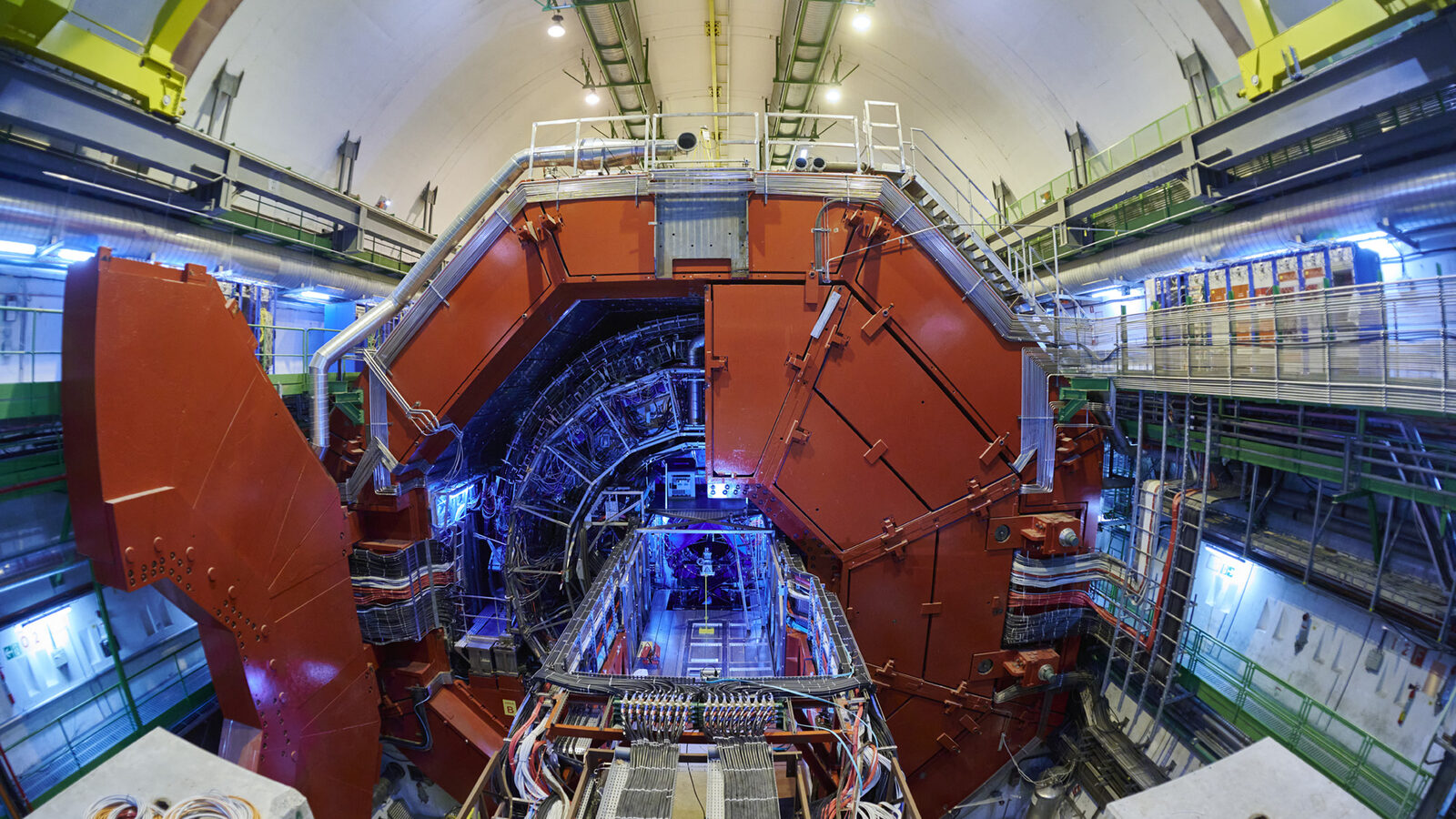
• It was 2023, and Sarah Porteboeuf’s fridge calendar had “heavy-ion run” scribbled in big red letters across the end of September and most of October. • “My family knew that this period was the most intense of the year,” Porteboeuf says. • Porteboeuf is a physicist on the ALICE Experiment, one of the four large experiments that collects data from the Large Hadron Collider at CERN. • Typically, when scientists wrap up the LHC’s usual run of proton-proton collisions, they fill the LHC with lead nuclei and do a few weeks of heavy-ion physics. • Unlike the other big experiments, ALICE is designed to study heavy-ion collisions. • “The ALICE acronym is A Large Ion Collider Experiment,” Porteboeuf says.
Article Summaries:
- In September‑October 2023, the ALICE experiment at CERN’s Large Hadron Collider began a new lead‑ion run after a multi‑year upgrade and a 2022 helium leak had left the detector without fresh data since 2018. During the first two minutes of collisions, the inner tracking system displayed a “hole,” indicating a loss of signal in a portion of the detector. ALICE scientists suspected a beam‑trajectory issue that was over‑saturating chips, potentially compromising up to a quarter of the experiment. With only five weeks of data‑taking available, the team urgently investigated the cause to preserve the run’s scientific output.
Sources: