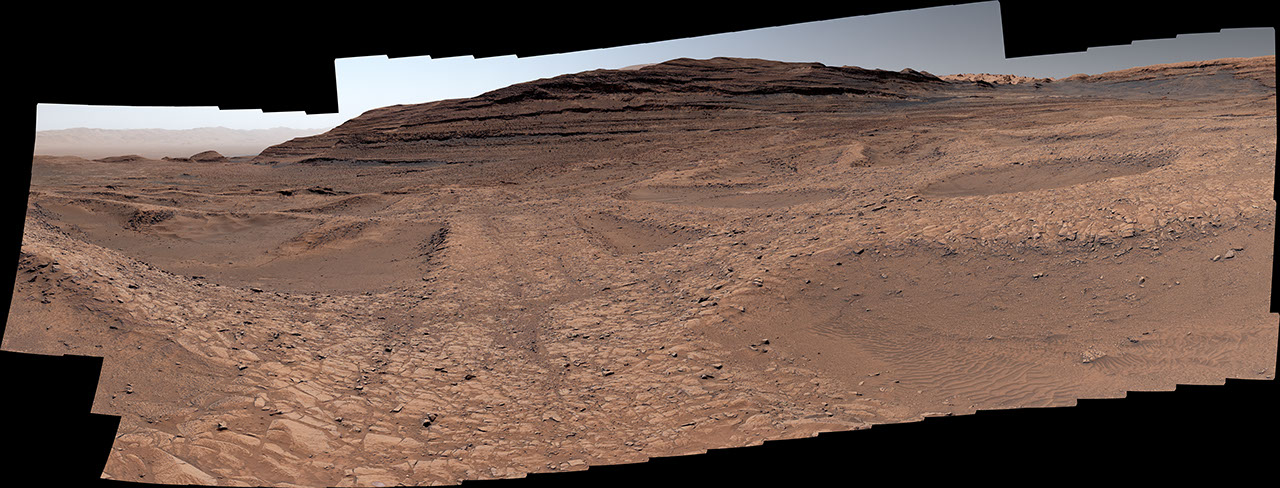
• 1 Min Read Curiosity Surveys the Boxwork Region PIA26693 Credits: NASA/JPL-Caltech/MSSS Photojournal Navigation Science Photojournal Curiosity Surveys the Boxwork… Photojournal Home Photojournal Search Latest Content Galleries Feedback RSS About Downloads Curiosity Surveys the Boxwork Region PNG (171.15 MB) Description NASA’s Curiosity Mars rover captured this panorama of boxwork formations - the low ridges seen here with hollows in between them - using its Mastcam on Sept. • 26, 2025, the 4,671st Martian day, or sol, of the mission. • These boxwork formations were created billions of years ago when water leaked through rock cracks. • Minerals carried into the cracks later hardened; after eons of windblown sand eroding away the softer rock, the hardened ridges were left exposed. • The panorama is made up of 179 individual images that were stitched together after being sent back to Earth. • This natural color view is approximately how the scene would appear to an average person if they were on Mars.
Article Summaries:
- NASA’s Curiosity rover captured a detailed panorama of boxwork formations on Mars on September 26, 2025 (sol 4,671). Using its Mastcam, the rover photographed 179 individual images that were later stitched together to create a natural‑color view of the low ridges and hollows that characterize the region. The boxwork features were formed billions of years ago when water seeped through rock fractures, depositing minerals that hardened; subsequent wind erosion removed softer material, leaving the hardened ridges exposed. The image, now available in the NASA Photojournal, illustrates the geological history of the Martian surface and demonstrates Curiosity’s continued scientific contributions.
- NASA’s Curiosity rover captured a 179‑image panorama of boxwork formations on Mars on September 26, 2025 (sol 4,671). The low ridges and hollows were formed billions of years ago when water seeped through rock cracks, depositing minerals that later hardened. Wind erosion removed softer material, leaving the ridges exposed. The Mastcam, built by Malin Space Science Systems, produced a natural‑color composite that approximates how the scene would look to a human on the Martian surface. The stitched panorama is now available on Earth, providing new visual data on ancient hydrothermal processes in the region.
- NASA’s Curiosity Mars rover captured this panorama of boxwork formations-the low ridges seen here with hollows in between them-using its Mastcam on Sept. 26, 2025, the 4,671st Martian day (sol) of the mission. These boxwork formations were created billions of years ago when water leaked through rock cracks. Minerals carried into the cracks later hardened; after eons of windblown sand eroding away the softer rock, the hardened ridges were left exposed.
Sources: