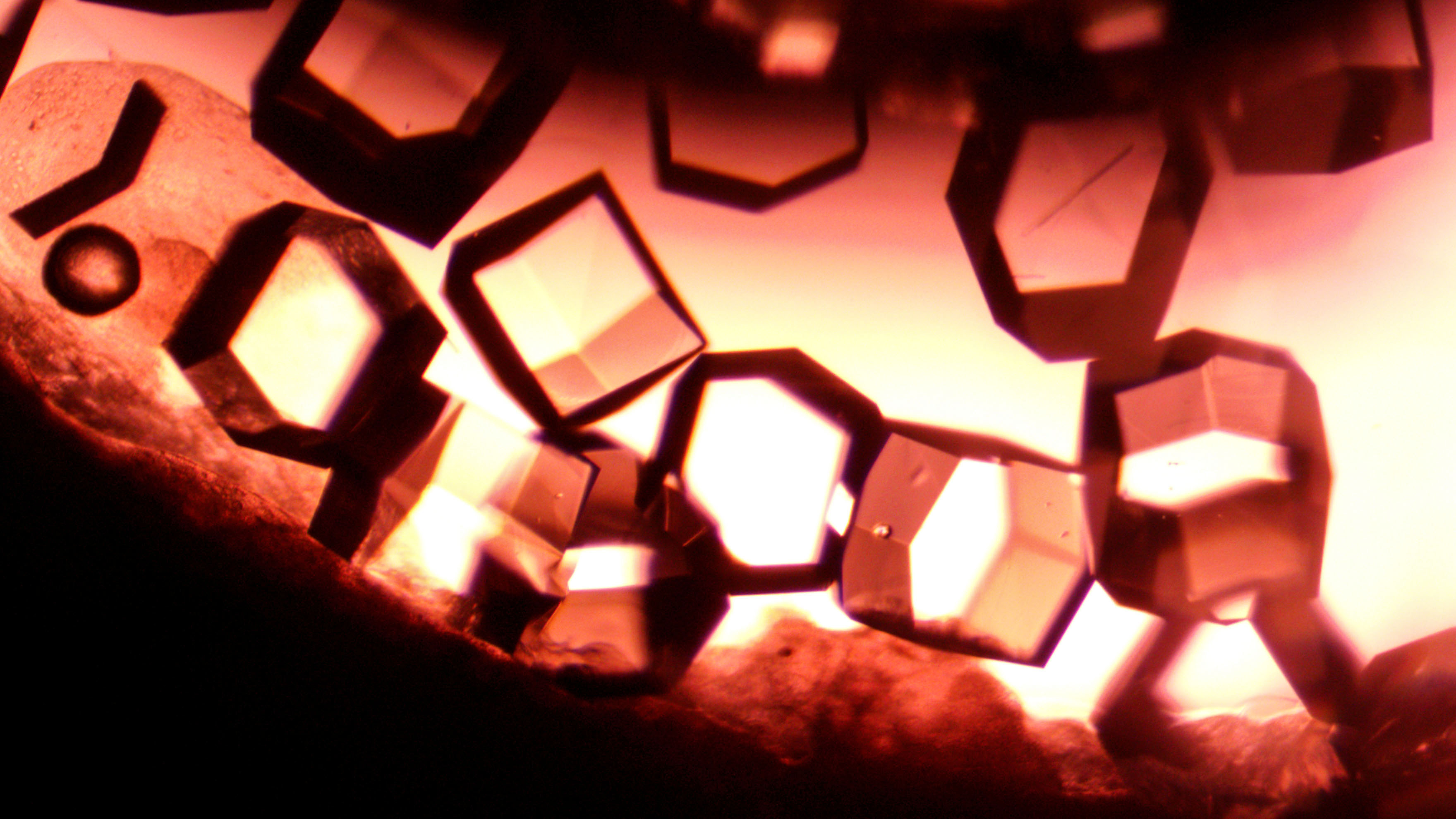
• 1 min read Crystals Grown in Space Monika Luabeya This June 5, 2024, image shows lysozyme crystals aboard the International Space Station. • Lysozyme is a protein found in bodily fluids like tears, saliva, and milk, and is used as a control compound to demonstrate well-formed crystals. • Lysozyme plays a vital role in innate immunity, protecting against bacteria, viruses, and fungi. • The crystals were grown with Redwire’s PIL-BOX in astudy of the effect of microgravity on various types of crystals production. • Image credit: Redwire
1 min read Crystals Grown in Space Monika Luabeya This June 5, 2024, image shows lysozyme crystals aboard the International Space Station. • Lysozyme is a protein found in bodily fluids like tears, saliva, and milk, and is used as a control compound to demonstrate well-formed crystals.
Article Summaries:
- On June 5, 2024, an image released by Redwire shows lysozyme crystals grown aboard the International Space Station. The crystals were produced using Redwire’s PIL‑BOX, a device designed to study how microgravity influences crystal formation. Lysozyme, a protein found in tears, saliva, and milk, is commonly used as a control compound in crystallography because it reliably forms well‑ordered crystals. The study aims to assess the effect of the space environment on crystal production, which could inform future pharmaceutical and materials research.
- Redwire’s PIL‑BOX system was used to grow lysozyme crystals aboard the International Space Station, as shown in a June 5, 2024 image. Lysozyme, a protein found in tears, saliva and milk, is commonly used as a control compound for producing well‑formed crystals. The experiment, part of a broader study on microgravity’s impact on crystal production, aimed to assess how reduced gravity affects crystallization processes. The crystals also highlight lysozyme’s role in innate immunity, where it helps protect against bacteria, viruses and fungi. The image credit is attributed to Redwire.
Sources: