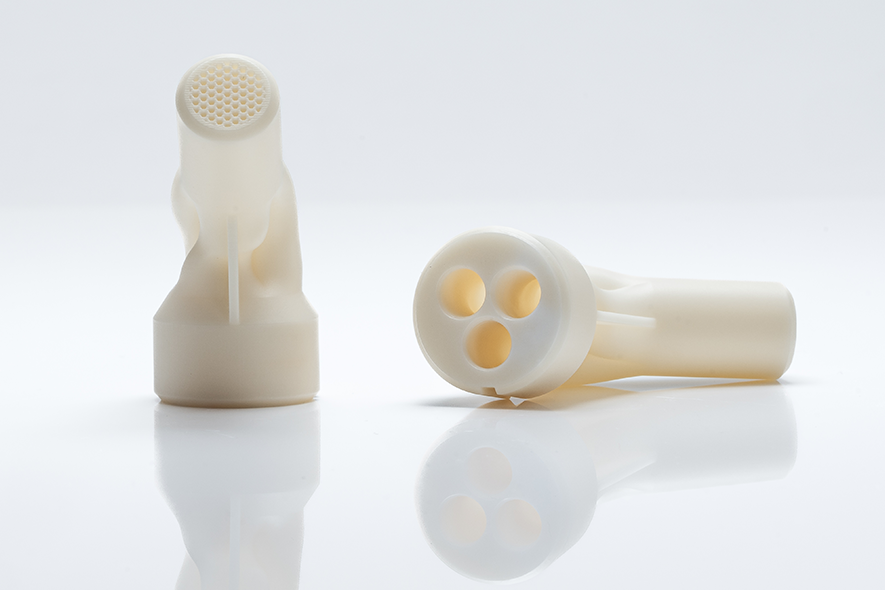
• With its Lithography-based Ceramic Manufacturing (LCM) technology, Lithoz has set the technological cornerstone for scaling ceramic additive manufacturing to industrial production for many key industries. • These industries - ranging from aerospace and aviation, semiconductors, GreenTech to MedTech - are characterised by tightly regulated and closely monitored processes, strict qualification regimes, and highly time-sensitive logistic chains. • Introducing a fundamentally new manufacturing system into such environments presents a major challenge, not only from a technological point of view. • Moreover, both parties are faced with significant implementation challenges from a quality management and validation perspective. • Selling first printers into these industries requires momentum and technological differentiation to convert a first touchdown into a long-lasting and reliable business partnership alongside traditional technologies. • However, it is essential to keep up absolute discipline by respecting industry quality standards permanently, by ensuring precise technological repeatability, and by delivering worldwide customer support needed to establish both the process as a complementary full-fledged industrial ecosystem and the trust shown by the industry’s decision-makers.
Article Summaries:
- With its Lithography-based Ceramic Manufacturing (LCM) technology, Lithoz has set the technological cornerstone for scaling ceramic additive manufacturing to industrial production for many key industries. These industries - ranging from aerospace and aviation, semiconductors, GreenTech to MedTech - are characterised by tightly regulated and closely monitored processes, strict qualification regimes, and highly time-sensitive logistic chains. Introducing a fundamentally new manufacturing system into such environments presents a major challenge, not only from a technological point of view. Moreov
Sources: