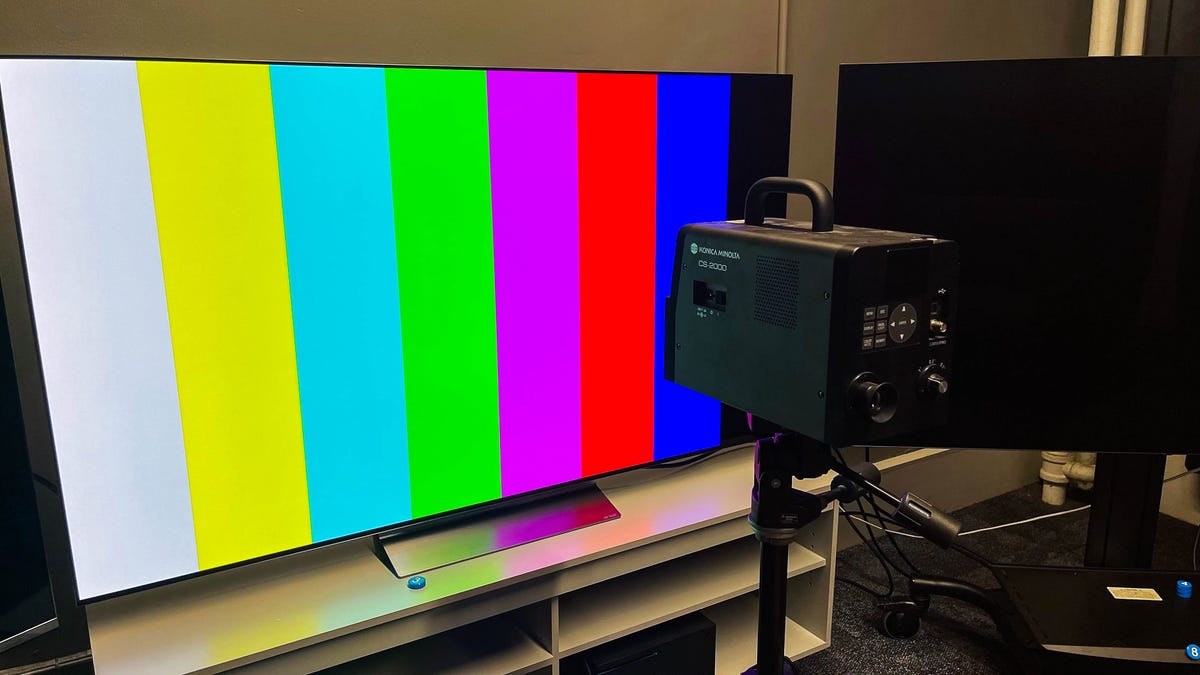
• CNET uses side‑by‑side comparisons and specialized measurement equipment. • Main instrument costs $28,000, ensuring precise brightness and color data. • Tests cover gaming, HDR, off‑angle, and smart TV features. • Evaluation includes voice command and smart TV feature assessment. • Process refined over two decades to provide unbiased results.
Article Summaries:
- CNET’s 2026 TV review process relies on a side‑by‑side comparison lineup in a dedicated lab with controlled lighting. Reviewers use a Konica Minolta CS‑2000 spectroradiometer-priced at roughly $28,000-to measure luminance and color across OLED, LCD, and LED panels. Additional equipment includes a Murideo 6G signal generator, HDMI analyzers, a 4K matrix switch, lag testers, and Blu‑ray players for content playback. Tests cover 4K HDR performance, gaming input lag, off‑angle and bright‑room viewing, and smart‑TV features such as voice commands. CNET emphasizes two decades of experience and objective criteria to deliver what it claims are the most reliable TV reviews.
Sources:
- https://www.cnet.com/tech/home-entertainment/how-we-test-tvs/ (Latest source article published: 2026-02-24 11:00 UTC)