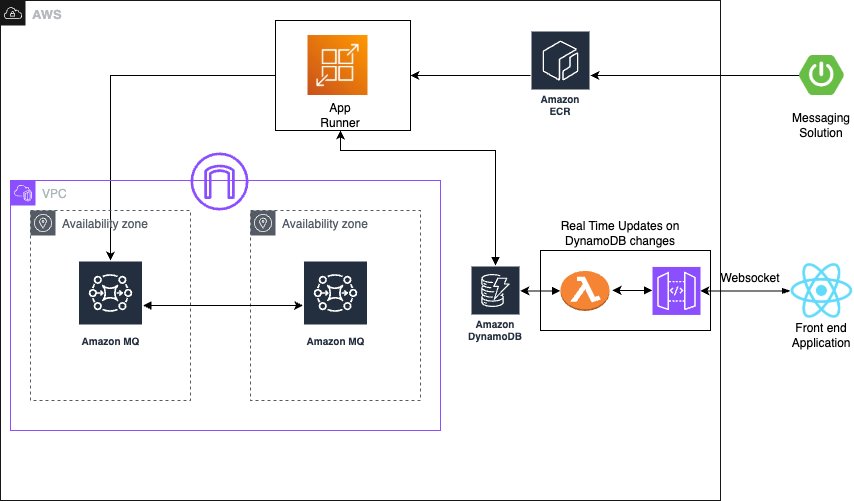
• AWS Architecture Blog Build priority-based message processing with Amazon MQ and AWS App Runner Organizations need message processing systems that can prioritize critical business operations while handling routine tasks efficiently. • When handling time-sensitive tasks like rush orders from key customers, critical system alerts, or multi-step business processes, you need to prioritize urgent messages while making sure other routine requests are processed reliably. • In this post, we show you how to build a priority-based message processing system using Amazon MQ for priority queuing, Amazon DynamoDB for data persistence, and AWS App Runner for serverless compute. • We demonstrate how to implement application-level delays that high-priority messages can bypass, create real-time UIs with WebSocket connections, and configure dual-layer retry mechanisms for maximum reliability. • This solution addresses three critical challenges in modern data processing systems: - Implementing configurable delay processing at the application level - Supporting priority-based message routing that respects business requirements - Providing real-time feedback to users through WebSocket connections The use of AWS managed services reduces operational complexity, so teams can focus on business logic rather than infrastructure management. • Message handling with priority-based processing makes sure operations receive attention while routine tasks are processed in the background.
Article Summaries:
- AWS announced a new serverless architecture that lets organizations prioritize critical business messages while still handling routine tasks efficiently. The solution combines Amazon MQ for priority‑based queuing, Amazon DynamoDB for durable storage, and AWS App Runner for container‑based compute. It implements application‑level delays that high‑priority messages can bypass, uses JMS priority levels (9, 4, 0) to route messages, and provides real‑time status updates via WebSocket. Dual‑layer retry logic enhances reliability, and infrastructure‑as‑code templates enable consistent deployment across environments. By leveraging managed services, teams can focus on business logic rather than infrastructure management.
Sources: