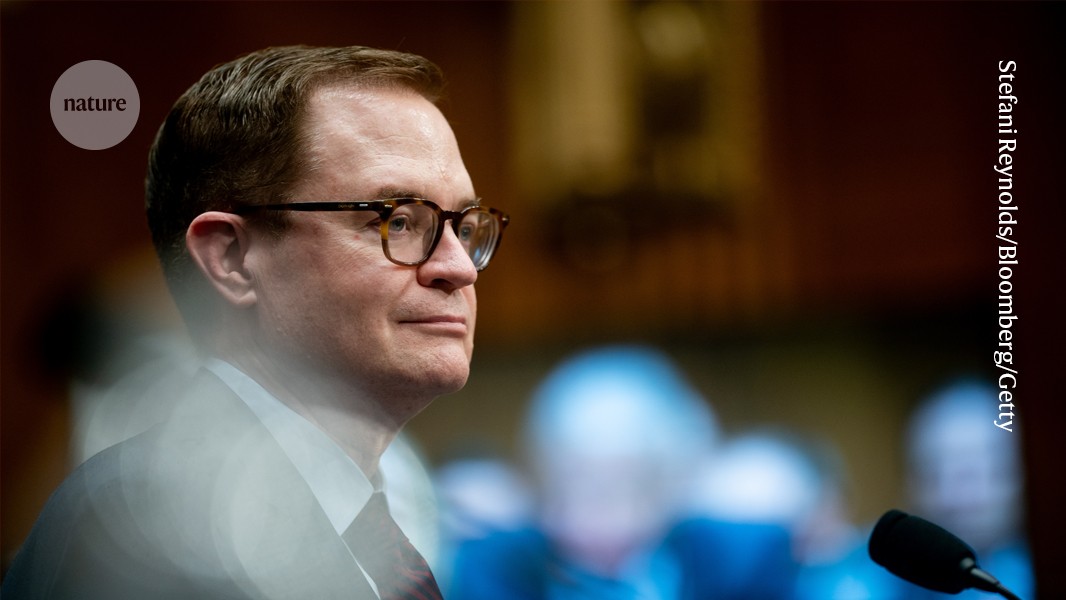
• Email Bluesky Facebook LinkedIn Reddit Whatsapp X Jim O’Neill, a biotechnology investor who has held other positions in government, will be appointed by US President Donald Trump to run the US National Science Foundation.Credit: Stefani Reynolds/Bloomberg/Getty US President Donald Trump plans to nominate biotechnology investor Jim O’Neill to be the next leader of the National Science Foundation (NSF), a White House spokesperson confirmed toNature. • The NSF, one of the largest funders of basic US research, has been without a permanent head since April 2025 when director Sethuraman Panchanathanabruptly resignedas the Trump administration cut hundreds of the agency’s research grants and proposed a massive budget cut. • Hundreds more NSF grants terminated after agency director resigns Hundreds more NSF grants terminated after agency director resigns O’Neill left his post as the acting head of the US Centers for Disease Control and Prevention (CDC) last week. • That position will now be taken up byUS National Institutes of Health (NIH) director Jayanta Bhattacharya. • “Both are eminently qualified for these positions, and the White House has confidence in them to deliver on the President’s agenda,” a White House spokesperson said in a statement. • The NSF - currently led by Brian Stone, who is the agency’s chief of staff - declined to comment.
Article Summaries:
- US President Donald Trump has announced plans to nominate biotechnology investor Jim O’Neill as the next director of the National Science Foundation (NSF). O’Neill, a former senior official at the Department of Health and Human Services and a private‑sector executive who worked with investor Peter Thiel, would become the first non‑scientist or engineer to lead the agency. The NSF has been without a permanent head since April 2025, when director Sethuraman Panchanathan resigned amid a broader administration effort to cut research grants and staff. O’Neill would inherit an agency that has lost roughly 30 % of its workforce, operates remotely, and faces ongoing budget uncertainty, though Congress recently rejected a proposed 57 % cut.
Sources: