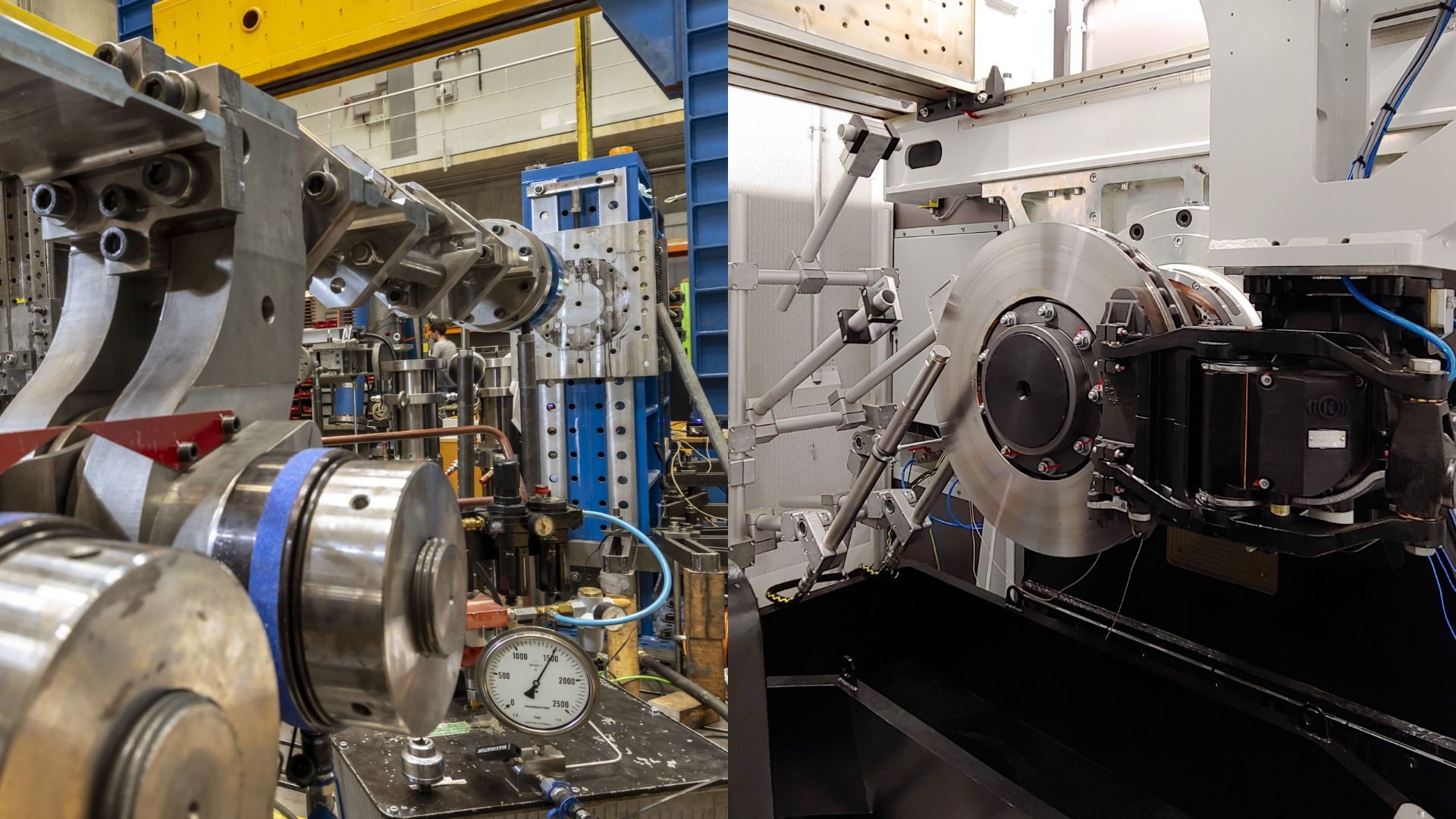
• Austria opens advanced rail lab focused on real-world steel fatigue and brake vibration Researchers will use advanced brake and roller test rigs to simulate real operating conditions, validating new approaches to structural durability in rail vehicles. • Rail cars and locomotives face relentless mechanical stress. • Every trip subjects frames, axles, and brake systems to dynamic forces and shifting loads. • Manufacturers must reduce weight and energy use while meeting strict safety rules. • A new research lab in Austria aims to help the industry meet those demands. • Researchers at Graz University of Technology on Thursday opened the Christian Doppler Laboratory for Structural Integrity in Rail Vehicle Design.
Article Summaries:
- Austria inaugurated the Christian Doppler Laboratory for Structural Integrity in Rail Vehicle Design at Graz University of Technology, a government‑funded facility aimed at improving rail vehicle durability. The lab will use advanced brake and roller rigs to replicate real‑world operating conditions, focusing on steel fatigue in welded frames, axles, and wheelsets, and on vibration‑induced brake wear. Researchers plan to translate laboratory findings into practical design rules that manufacturers can adopt quickly, supporting lighter, more energy‑efficient trains that meet strict safety standards. The project is part of Austria’s industrial strategy to boost competitiveness, climate action, and technological sovereignty, and will collaborate with industry partners such as Siemens Mobility Austria, Plasser & Theurer, and Miba Frictec.
Sources: