• AWS Architecture Blog Architecting conversational observability for cloud applications Modern cloud applications are commonly built as a collection of loosely coupled microservices running on services like Amazon Elastic Kubernetes Service (Amazon EKS), Amazon Elastic Container Service (Amazon ECS), or AWS Lambda. • This architecture gives engineering teams flexibility and scalability, but its inherently distributed nature also makes troubleshooting more difficult. • When something breaks, engineers often find themselves digging through logs, events, and metrics scattered across different observability layers. • With Kubernetes, for example, without a deep understanding of the service, troubleshooting can turn into a time-consuming effort to manually correlate information from different sources. • In this post, we walk through building a generative AI-powered troubleshooting assistant for Kubernetes. • The goal is to give engineers a faster, self-service way to diagnose and resolve cluster issues, cut down Mean Time to Recovery (MTTR), and reduce the cycles experts spend finding the root cause of issues in complex distributed systems.
Article Summaries:
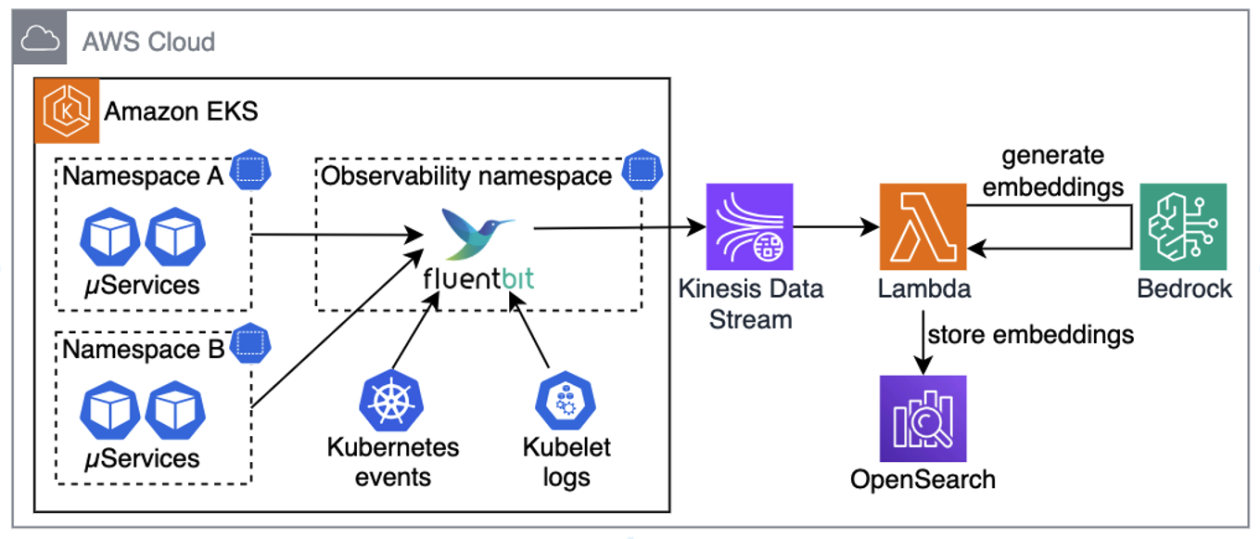
- AWS Architecture Blog reports that modern cloud applications, often built from loosely coupled microservices on Amazon EKS, ECS, or Lambda, suffer from fragmented observability, making troubleshooting time‑consuming. A 2024 Observability Pulse survey found 48 % of organizations cite knowledge gaps as the biggest challenge, and 82 % experience MTTRs exceeding an hour. To address this, AWS outlines a generative AI‑powered troubleshooting assistant that ingests Kubernetes telemetry-logs, events, metrics-and uses large language models to guide engineers through root‑cause analysis. The solution promises faster, self‑service diagnostics on EKS and can be adapted to other AWS compute services.
Sources: