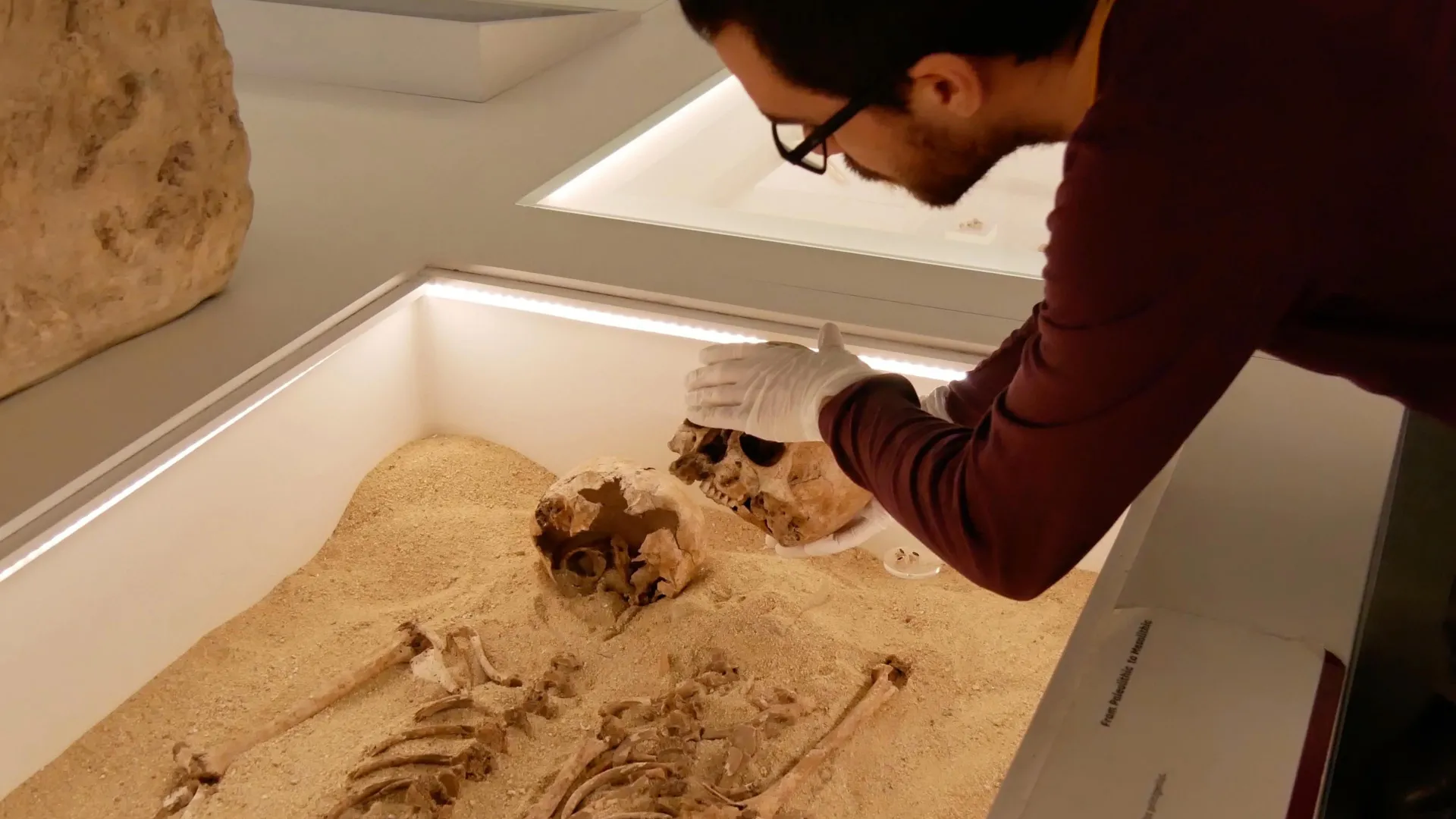
• Ancient DNA solves 12,000-year-old mystery of rare genetic growth disorder A 12,000-year-old Ice Age burial has revealed the earliest genetic diagnosis of a rare growth disorder. • An international team led by the University of Vienna and Liège University Hospital Centre has uncovered genetic changes linked to a rare inherited growth disorder in two people who lived more than 12,000 years ago. • By combining ancient DNA testing with modern clinical genetics, the researchers diagnosed the condition in two individuals buried together in southern Italy. • Their findings, published in theNew England Journal of Medicine, demonstrate that paleogenomics can now trace ancient population history and pinpoint rare genetic diseases in prehistoric humans. • The work builds on a fresh investigation of a famous Upper Paleolithic burial discovered in 1963 at Grotta del Romito in southern Italy. • For decades, the site intrigued scientists because of unusual skeletal traits and the way the two individuals were laid to rest.
Sources: