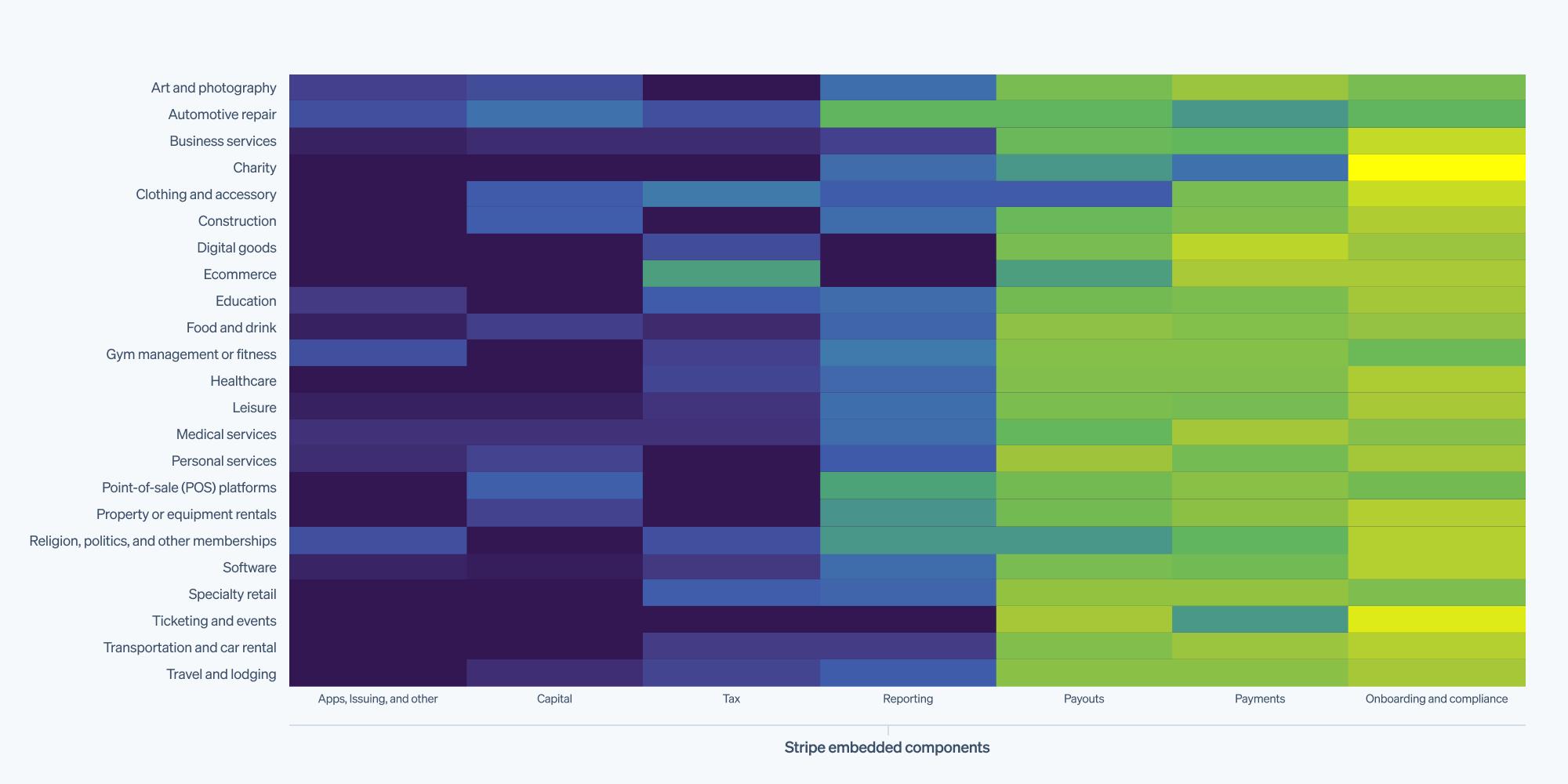
• Analyzing how SaaS platforms are shipping payments and finance products in days Last year, we introduced Stripe Connect embedded components: prebuilt, production-ready UI modules that platforms can drop in with minimal code. • The interfaces provide platforms with plug-and-play payments and finance workflows, from onboarding customers and supporting localized payment methods to helping users manage disputes and receive payouts. • Active users of embedded components more than tripled in the past year, including among platforms such as Squarespace, DoorDash, and FreshBooks. • To guide what we build next, we examined real usage data for SaaS platforms across sectors and industries. • That analysis revealed surprising patterns about how different platform types approach payments integration, how they’re customizing their workflows, and where they’re getting the most value. • Large platforms are 3x more likely than startup platforms to adopt embedded components We initially introduced embedded components to meet the needs of startup platforms, which often face pressure to build payments and finance features quickly despite limited resources.
Article Summaries:
- Analyzing how SaaS platforms are shipping payments and finance products in days Last year, we introduced Stripe Connect embedded components: prebuilt, production-ready UI modules that platforms can drop in with minimal code. The interfaces provide platforms with plug-and-play payments and finance workflows, from onboarding customers and supporting localized payment methods to helping users manage disputes and receive payouts. Active users of embedded components more than tripled in the past year, including among platforms such as Squarespace, DoorDash, and FreshBooks. To guide what we build ne
- Stripe’s Connect embedded components-ready‑made UI modules for payments and finance workflows-have seen rapid uptake among SaaS platforms. In the past year, active users more than tripled, with major players such as Squarespace, DoorDash, and FreshBooks leading adoption. Large platforms (≥1,000 employees or $1 billion+ revenue) are nearly three times more likely to use the components than startups, deploying a median of three modules versus two for smaller firms. The primary drivers are scaling complexity, international compliance, and the need to ship new features quickly. Interestingly, platforms serving in‑person businesses, especially automotive repair, adopt the components at twice the median rate, using them to streamline payments for brick‑and‑mortar merchants.
Sources: