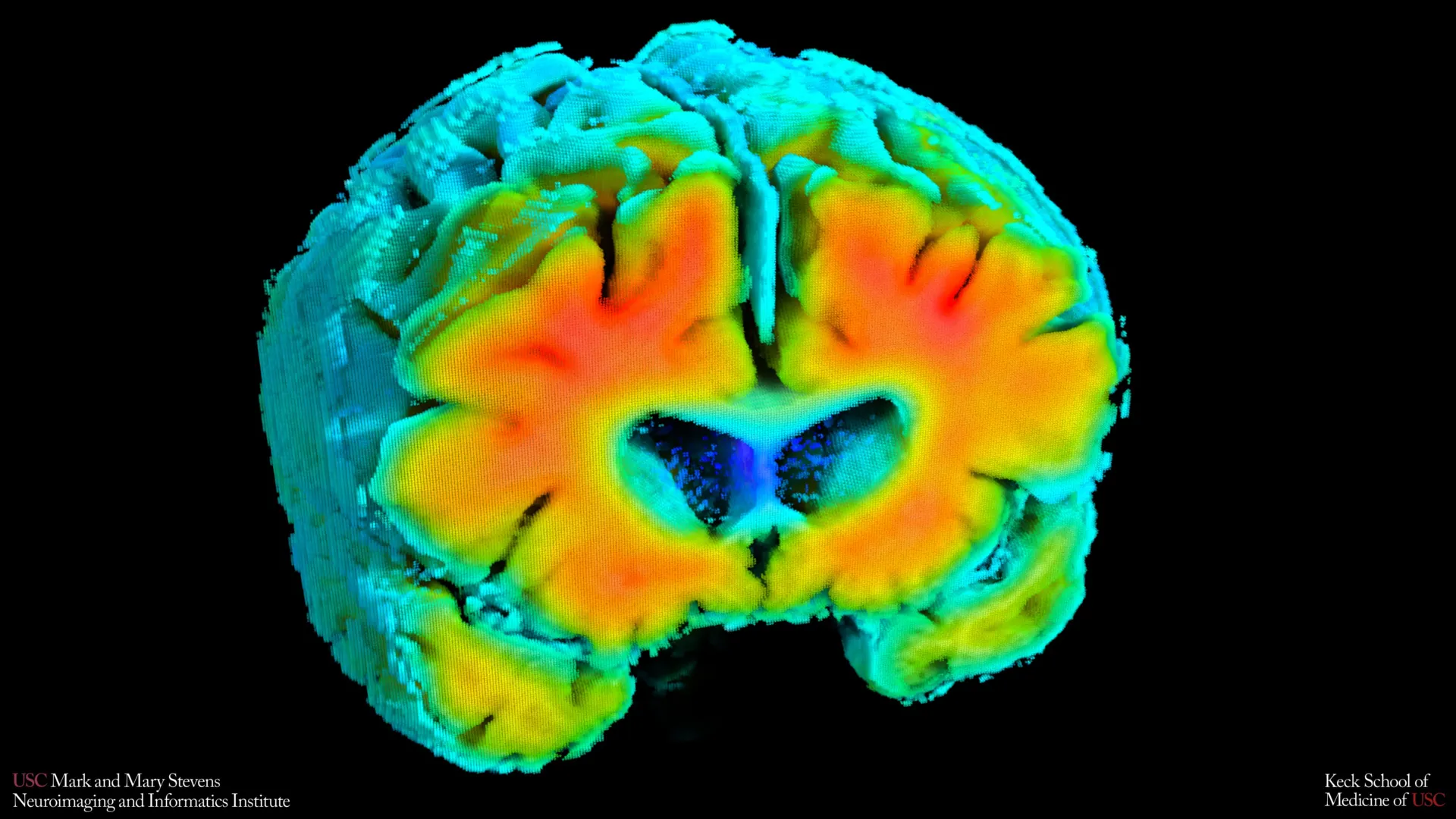
• Alzheimerâ s may begin with a silent drop in brain blood flow Small shifts in how blood moves through the brain and how brain cells receive oxygen may be closely connected to the risk of Alzheimer’s disease. • That is the conclusion of new research from the Mark and Mary Stevens Neuroimaging and Informatics Institute (Stevens INI) at the Keck School of Medicine of USC. • The study, published inAlzheimer’s and Dementia: The Journal of the Alzheimer’s Association, examined older adults both with and without cognitive impairment. • Researchers found that simple, noninvasive measures of brain blood flow and oxygen levels were linked to well known signs of Alzheimer’s, including amyloid plaque buildup and shrinkage of the hippocampus, the part of the brain that plays a central role in memory. • The results suggest that the health of the brain’s blood vessels may influence the disease process early on and could help flag people at risk before noticeable symptoms develop. • “Amyloid and tau are often considered the primary players in Alzheimer’s disease, but blood flow and oxygen delivery are also critical,” said Amaryllis A.
Article Summaries:
- Alzheimerâs may begin with a silent drop in brain blood flow - Date: - February 24, 2026 - Source: - Keck School of Medicine of USC - Summary: - Subtle changes in brain blood flow and oxygen use are closely linked to hallmark signs of Alzheimerâs, including amyloid plaques and memory-related brain shrinkage. Simple, noninvasive scans may one day help spot risk earlierâby looking at the brainâs vascular health, not just its plaques. - Share: Small shifts in how blood moves through the brain and how brain cells receive oxygen may be closely connected to the risk of Alzheimer’s disease. That is t
Sources:
- https://www.sciencedaily.com/releases/2026/02/260224023159.htm (Latest source article published: 2026-02-24 15:21 UTC)