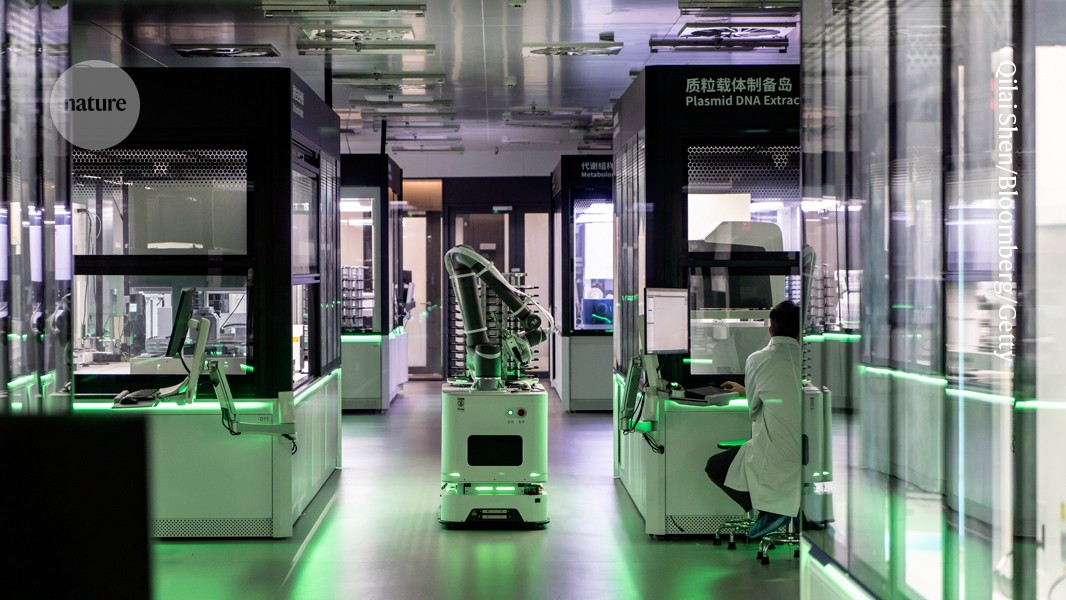
• Email Bluesky Facebook LinkedIn Reddit Whatsapp X AI-controlled robots will not replace bench scientists soon, but AI systems are already taking work from human data analysts and research coders.Credit: Qilai Shen/Bloomberg/Getty Artificial intelligenceis threatening many jobs, and those in science seem unlikely to be exempt. • So which jobs are most at risk? • Seeking answers,Naturespoke to more than four dozen researchers across academia and industry who use AI in their work. • Many of them say that AI’s ascendance is already reducing demand forhuman researchers who can write codeor do basic data analysis - tasks often handled by graduate students, postdocs or those without graduate training. • Obsolescence of some basic roles in areas such as computer modelling “is not even in the future. • It’s happening now,” says Xuanhe Zhao, a mechanical engineer at the Massachusetts Institute of Technology in Cambridge, because “AI is doing this much better than entry-level scientists”.
Article Summaries:
- Nature reports that artificial intelligence is already reshaping the scientific workforce, with the most vulnerable roles being those that involve routine coding, data analysis, and basic computational tasks-positions traditionally filled by graduate students, postdocs, and junior researchers. AI tools now generate code, run simulations, and process data, rendering many research‑programmer jobs obsolete. Even translation and literature‑summarizing tasks are at risk. While hands‑on experimentation and senior project‑lead roles are seen as more secure, some experts warn that AI is encroaching on higher‑level cognitive functions. The shift could curtail new hires and threaten the pipeline of future scientists.
Sources: