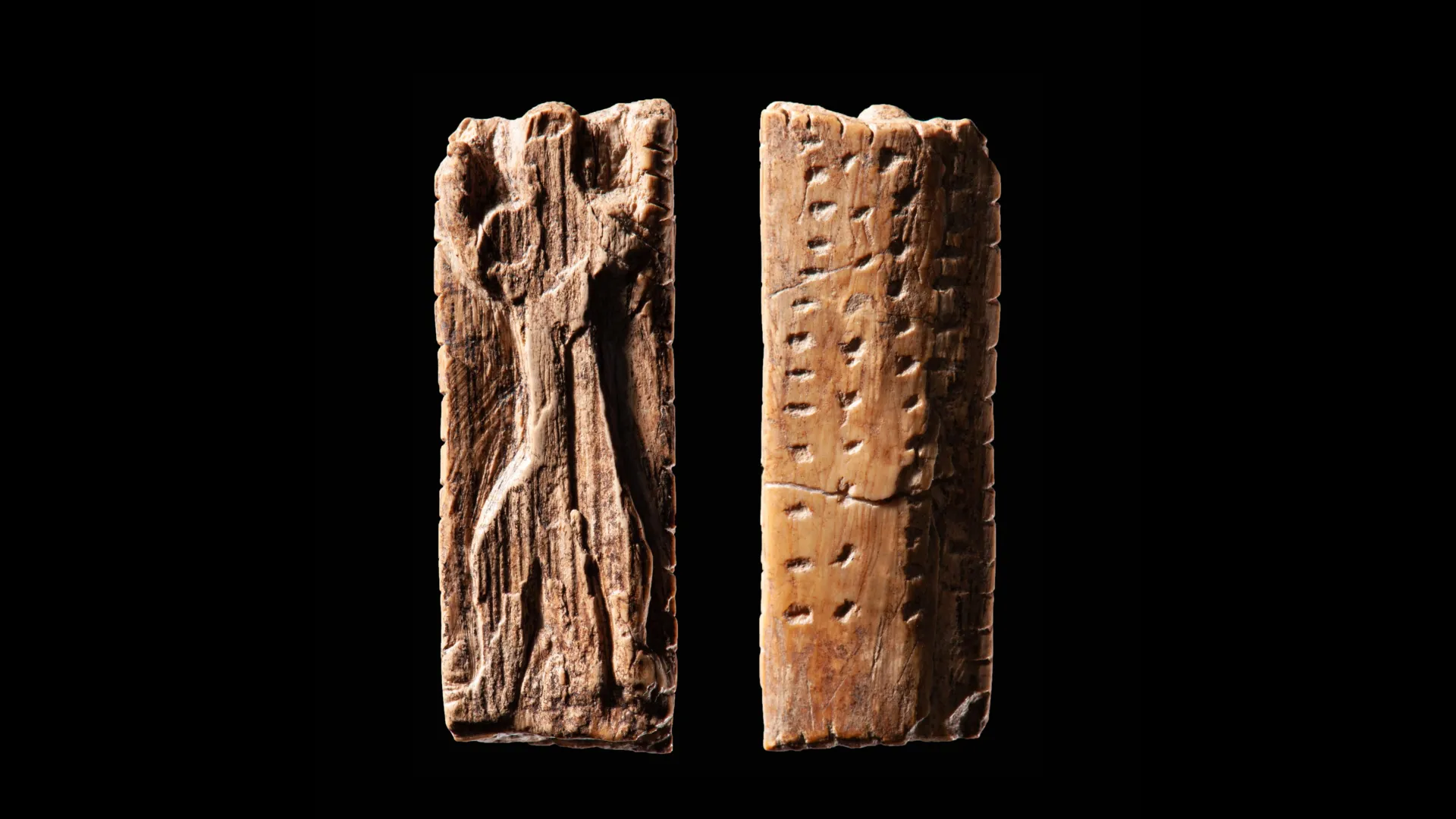
• 40,000-year-old signs show humans were recording information long before writing More than 40,000 years ago, early humans were already engraving symbols onto tools, figurines, and other objects • A new study by linguist Christian Bentz of Saarland University and archaeologist Ewa Dutkiewicz of the Museum für Vor- und Frühgeschichte (Museum of Prehistory and Early History) in Berlin suggests these sequences of signs were not random decorations • Instead, they display levels of complexity and information density similar to proto-cuneiform, the earliest known writing system, which appeared around 3,000 B • , tens of thousands of years later • Using computational techniques, the researchers analyzed more than 3,000 signs carved into 260 Paleolithic artifacts to better understand how writing may have evolved • Their results, which were published inPNAS, were clear – and even the team did not expect such a close comparison to early writing systems
Article Summaries:
- 40,000-year-old signs show humans were recording information long before writing - Date: - February 25, 2026 - Source: - Saarland University - Summary: - More than 40,000 years ago, Ice Age humans were carving repeated patterns of dots, lines, and crosses into tools and small ivory figurines. A new computational study of more than 3,000 of these Paleolithic signs reveals that they were not random decorations but structured sequences with measurable complexity. Surprisingly, their information density rivals that of proto-cuneiform, the earliest known writing system that emerged around 3,000 B.C
Sources:
- https://www.sciencedaily.com/releases/2026/02/260225001301.htm (Latest source article published: 2026-02-25 05:52 UTC)