• Copy link Facebook X Whatsapp Reddit Pinterest Flipboard Email Get Tom’s Hardware’s best news and in-depth reviews, straight to your inbox. • You are now subscribed Your newsletter sign-up was successful Billet Labs is back and has finalized itscast-iron Victorian radiator gaming PC build. • Alex from the London-based PC cooling innovators shared a detailed hour-long video with insights into the build, which should answer all your what, why, and how queries. • However, he thought that even for this impressive radiator-as-a-PC build, “cooling something like a5090is probably out of the question,” so anRTX 5080andRyzen 7 9800X3Dcombo were judged to be the sweet spot. • Desktop Roadmap Enterprise Roadmap Rubin in-depth The Stout Owl: The ultimate Noctua G2 PC We covered ateaserfor this incredibly stout Victorian-era cast-iron PC build just ahead of the New Year. • Thankfully, we now have a lot more information about this fascinating build and the concept/process behind it.
Article Summaries:
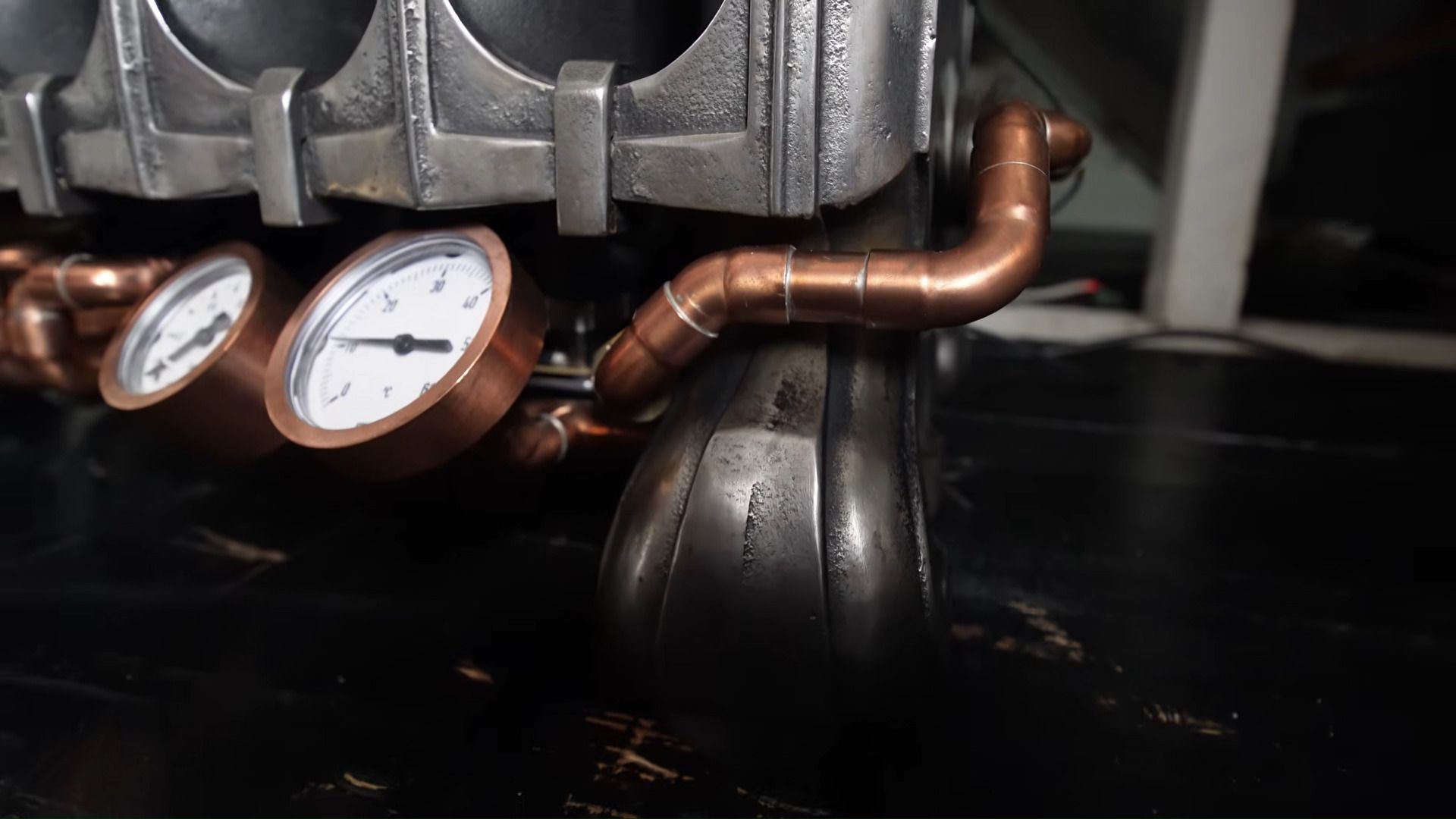
- Billet Labs has completed a unique gaming PC built inside a cast‑iron Victorian radiator, weighing 218 lb (99 kg) when filled with coolant. The build uses a 3D‑scanned model of the radiator’s uneven base to create a custom plastic mounting frame that holds a Ryzen 7 9800X3D, an RTX 5080, a Mini‑ITX motherboard, and a 600 W PSU. Cooling is achieved with an Alphacool GPU block, a proprietary AM5 block, copper piping, a pump, and three slim 120 mm fans. The team tested the system under a 520 W load for over an hour, noting that an RTX 5090 would likely exceed the radiator’s capacity. The project showcases a blend of historic aesthetics and modern liquid‑cooling technology.
- Billet Labs has finished a 218‑lb gaming PC built inside a cast‑iron Victorian radiator. The build uses an AMD Ryzen 7 9800X3D and an Nvidia RTX 5080, with a custom 3‑D‑printed chassis that mounts the motherboard, PSU, and GPU to the radiator’s curved base. The design includes a slim‑fan bay and a water‑cooling loop featuring an Alphacool block for the GPU and a prototype AM5 block for the CPU. After a 520‑W benchmark, the system ran for over an hour, demonstrating the radiator’s thermal mass. The team noted that cooling an RTX 5090 would likely be impractical.
Sources:
- https://www.tomshardware.com/desktops/pc-building/218-pound-pc-built-inside-a-cast-iron-victorian-radiator-cooling-an-rtx-5090-probably-out-of-the-question (Latest source article published: 2026-02-24 11:26 UTC)