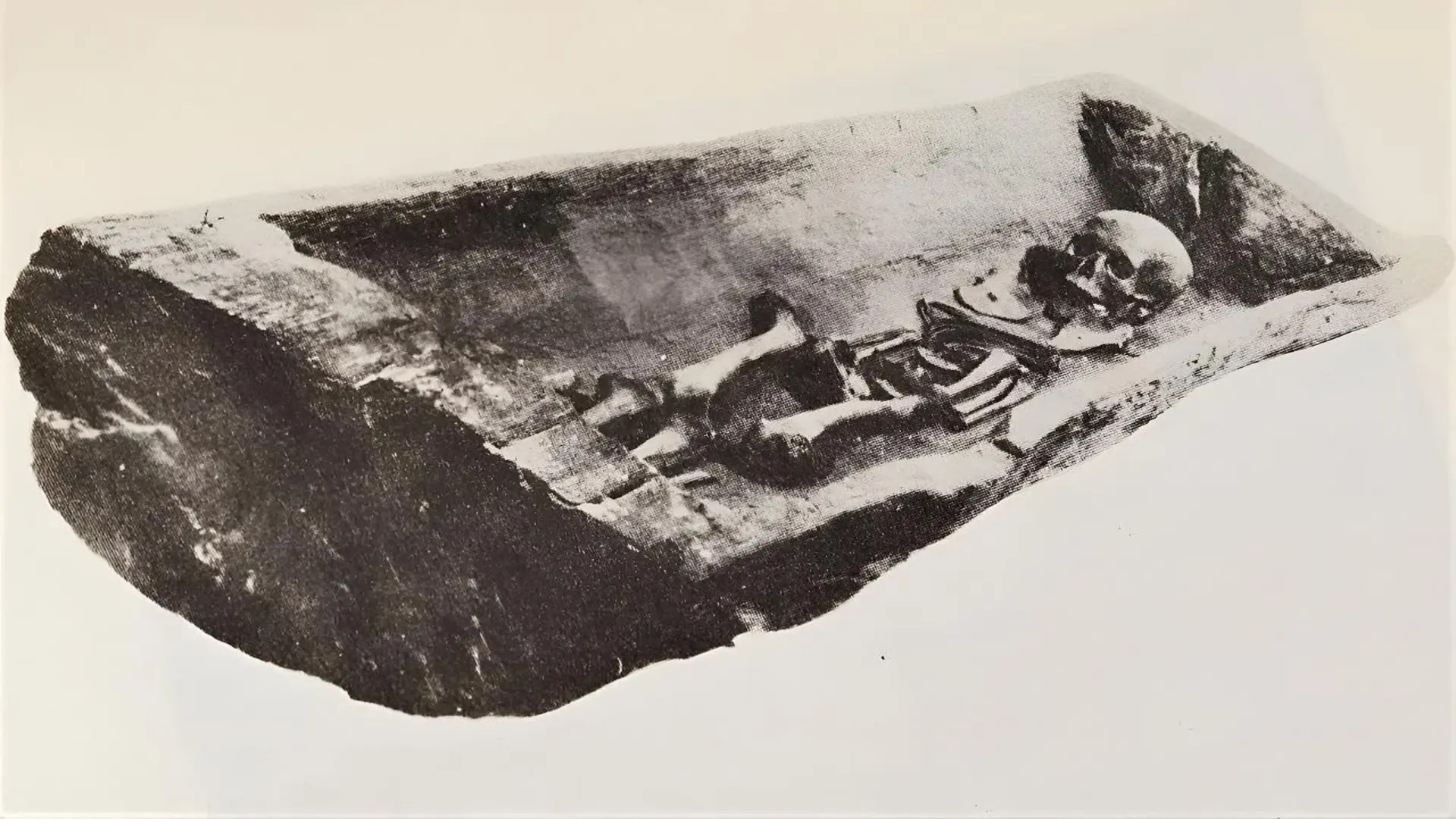
• 100-year-old mystery about log coffin that fell off cliff is solved The latest research sought to finally bring an end to the confusion by finally determining when the Princess of Bagicz was buried. • Initially discovered in 1899, the nicknamed the “Princess of Bagicz” because the only wooden sarcophagus to be found from the Roman Iron Age held a woman with stunningly well-preserved artifacts. • Carved from a single log, its existence rarely survives as the coffin was made of wood, but the wet, humid environment ended up preserving it, giving modern-day viewers an unprecedented look at a rare wooden Roman-era coffin. • In a study published in Archaeometry, the long-standing puzzle concerns her date of burial, one that inspired archaeologists to dub her a princess, regardless of whether she really was one. • Thought to have died in Roman times, the scientific analyses have never failed to return with conflicting dates. • The latest research sought to finally bring an end to the confusion by finally determining when the Princess of Bagicz was buried.
Article Summaries:
- A recent study published in Archaeometry resolves a century‑old debate over the burial date of the “Princess of Bagicz,” a 1,900‑year‑old wooden coffin found in 1899 in northwestern Poland. By applying dendrochronology to the oak log, researchers dated the tree to about 120 CE, matching the later end of previous estimates. Stable‑isotope analysis of the woman’s bones clarified that a high fish diet had skewed earlier radiocarbon dates, while strontium isotopes confirmed her Goth origins. The combined evidence places her burial firmly in the early 2nd century CE, ending the long‑standing 100‑year dating gap.
Sources: